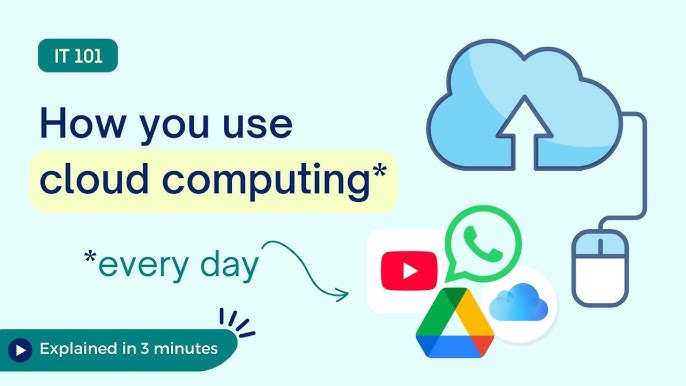

Cloud computing has become the backbone of modern IT infrastructure. By February 2026, the global cloud market exceeds $1 trillion, driven by massive adoption across enterprises, startups, and governments. Major providers—Amazon Web Services (AWS) at roughly 30–31%, Microsoft Azure at 20–25%, and Google Cloud at 11–13%—dominate, while hybrid, multi-cloud, edge, and AI-integrated setups grow rapidly.
Cloud computing delivers computing resources (servers, storage, databases, networking, software, analytics, AI) over the internet on a pay-as-you-go basis. This shift from owning hardware to renting capacity transforms how organizations operate.
Below are the key advantages and disadvantages of cloud computing in today’s landscape.
Advantages of Cloud Computing
- Cost Efficiency and Pay-as-You-Go Model Eliminates large upfront capital expenditures (CapEx) on hardware, data centers, and maintenance. Businesses pay only for resources used, converting costs to operational expenses (OpEx). In 2026, this remains a top driver, especially for startups and SMEs, though careful management prevents “cloud waste.”
- Scalability and Elasticity Resources scale instantly—up during traffic spikes (e.g., Black Friday for e-commerce) or down during quiet periods. This agility supports rapid growth without over-provisioning hardware.
- Flexibility and Speed of Deployment Applications and services deploy in minutes rather than months. Developers experiment quickly, and businesses launch new features or enter markets faster.
- Global Accessibility and Collaboration Access data and applications from anywhere with an internet connection. Remote and hybrid teams collaborate seamlessly using tools like Microsoft 365, Google Workspace, or cloud-based project platforms.
- Built-in Disaster Recovery and High Availability Leading providers offer geo-redundant storage, automatic backups, and failover across regions. Recovery times shrink dramatically compared to traditional on-premises setups.
- Automatic Updates and Maintenance Providers handle patching, security updates, and hardware refreshes. IT teams focus on innovation rather than routine maintenance.
- Enhanced Security (in Many Cases) and Compliance Support Hyperscalers invest billions in security—far more than most companies can afford alone. Features include advanced encryption, identity management, AI-driven threat detection, and certifications (e.g., GDPR, HIPAA, SOC 2). In 2026, cloud often provides stronger baseline security than legacy on-prem environments.
- Sustainability and Green Benefits Large cloud providers optimize data centers for energy efficiency, using renewable energy at scale. This helps organizations meet ESG goals more easily than maintaining private facilities.
- AI and Advanced Technology Integration Cloud platforms embed powerful AI/ML tools, GPUs/TPUs for training models, and serverless options. In 2026, nearly half of cloud workloads tie to AI, accelerating innovation in analytics, automation, and generative applications.
Disadvantages of Cloud Computing
- Ongoing Costs and Potential for Bill Shock While upfront costs drop, monthly bills can become unpredictable. Unused resources, data egress fees, and AI/GPU usage drive expenses higher—especially as some providers raise prices in 2026.
- Dependency on Internet Connectivity Cloud services require reliable, high-speed internet. Outages, latency, or poor bandwidth disrupt access—critical for real-time applications or remote locations.
- Security and Privacy Concerns Data resides off-site, raising risks of breaches, misconfigurations, or insider threats at the provider. Compliance with data sovereignty laws (e.g., EU or China regulations) complicates matters. While providers offer strong tools, ultimate responsibility for secure configuration lies with the customer.
- Vendor Lock-in Migrating away from one provider becomes difficult due to proprietary services, data formats, and integrations. Multi-cloud strategies mitigate this but add complexity.
- Limited Control Over Infrastructure Users have less visibility and control over underlying hardware and network compared to on-premises setups. This can frustrate teams needing custom performance tuning.
- Downtime and Reliability Risks Provider outages (though rare for hyperscalers) affect thousands of customers simultaneously. In 2026, most organizations use multi-region setups, but single points of failure persist.
- Data Transfer Costs and Egress Fees Moving large datasets in or out incurs charges, discouraging frequent large-scale transfers and complicating repatriation (“cloud repatriation” trends appear in some sectors).
- Complexity in Multi-Cloud and Hybrid Environments Combining public, private, edge, and on-prem resources boosts flexibility but increases management overhead, security surfaces, and observability challenges.
Quick Comparison Table
| Aspect | Advantages (Pros) | Disadvantages (Cons) |
|---|---|---|
| Cost | Pay-as-you-go, lower CapEx | Unpredictable bills, potential waste |
| Scalability | Instant elastic scaling | Over-provisioning risk |
| Accessibility | Anywhere, any device | Internet dependency |
| Security | Advanced tools & compliance support | Shared responsibility, misconfiguration risks |
| Control | Less maintenance | Reduced infrastructure control |
| Innovation | Built-in AI/ML, rapid deployment | Vendor lock-in |
| Reliability | Geo-redundancy, DR built-in | Provider outages impact many |
Final Thoughts in 2026
Cloud computing delivers unmatched agility, cost structures, and innovation potential—making it indispensable for most organizations. Trends like AI integration, edge computing, multi-cloud strategies, and sovereign clouds address many historical drawbacks.
The decision isn’t “cloud or no cloud”—it’s which cloud model (public, private, hybrid, multi) and how to govern it best. With disciplined cost management, strong security practices, and strategic architecture, advantages far outweigh disadvantages for the majority of use cases.
Whether you’re a startup scaling fast or an enterprise optimizing AI workloads, understanding these trade-offs helps harness cloud computing effectively in 2026.