
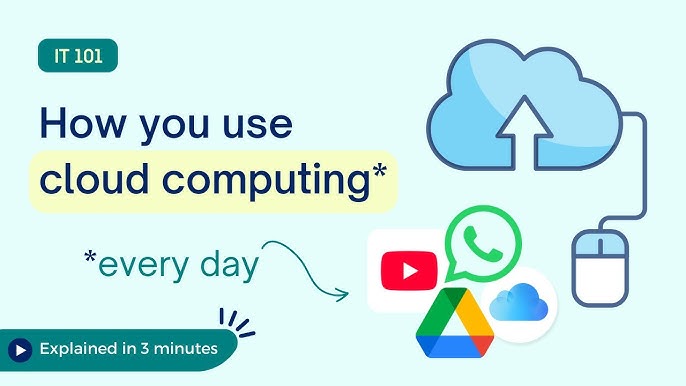
Most people rarely think about cloud computing—yet it quietly powers nearly every digital moment of modern life. From the moment you wake up and check your phone to streaming a show before bed, cloud technology handles storage, processing, syncing, and delivery behind the scenes. In 2026, cloud services are more seamless, AI-integrated, and ubiquitous than ever, often blending with edge computing for faster, lower-latency experiences.
Cloud computing delivers computing resources—servers, storage, databases, networking, software—over the internet (“the cloud”) instead of on local hardware. Major providers like Amazon Web Services (AWS), Microsoft Azure, and Google Cloud Platform (GCP) dominate, but consumers interact mostly through user-friendly apps and services built on these infrastructures.
Here are the most common ways cloud technology touches everyday routines today.
1. Storing and Accessing Personal Files Everywhere
Gone are the days of losing photos when your phone dies or carrying a USB drive. Cloud storage syncs files across devices instantly.
- Upload vacation photos from your smartphone → they appear on your laptop, tablet, and smart TV.
- Edit a document on your work computer → continue seamlessly on your phone during commute.
- Lose your device? Retrieve everything from another.
Popular services include:
- Google Drive & Google Photos
- Apple iCloud
- Dropbox
- OneDrive (Microsoft)
Billions of photos, videos, and documents live in the cloud, automatically backed up and accessible anywhere with internet.
2. Streaming Music, Videos, and Games On Demand
Entertainment relies entirely on cloud infrastructure for massive scale and global delivery.
- Netflix, YouTube, Disney+, Spotify, Apple Music, and Amazon Prime Video store content on cloud servers and use CDNs (content delivery networks—often cloud-powered) to stream in high quality with minimal buffering.
- Millions watch the same live event simultaneously without local servers crashing.
- Cloud gaming platforms like Xbox Cloud Gaming, NVIDIA GeForce Now, and emerging services let you play high-end games on modest devices or even phones—the heavy processing happens in distant data centers.
In 2026, low-latency edge cloud enhancements make streaming and cloud gaming feel local even for graphically intensive titles.
3. Email, Messaging, and Collaboration
Web-based email and chat apps run on cloud servers so you never “download” your inbox.
- Gmail, Outlook.com, Yahoo Mail → emails stored and searched in the cloud.
- WhatsApp, iMessage, Signal, Telegram → messages sync across phones, desktops, and tablets.
- Collaboration tools like Google Docs, Microsoft 365 (Word, Excel, Teams), Notion, Slack → real-time co-editing happens because documents live in the cloud.
Remote work, school group projects, and family shared calendars all depend on this always-available cloud backbone.
4. Social Media and Content Sharing
Every like, story, reel, post, and direct message travels through cloud systems.
- Instagram, TikTok, Facebook, X (Twitter), LinkedIn, Snapchat → photos, videos, and feeds served from cloud storage and processed with AI recommendation engines running in the cloud.
- Billions of users upload content daily; cloud handles moderation, personalization, and delivery at massive scale.
Your “For You” page exists because powerful cloud AI analyzes behavior in real time.
5. Smart Home Devices and IoT
Your thermostat, doorbell camera, lights, and voice assistant connect to the cloud.
- Amazon Alexa, Google Home, Apple HomeKit → voice commands processed in cloud AI (often with edge preprocessing for speed/privacy).
- Ring, Nest, Arlo cameras → footage stored and analyzed in the cloud; motion alerts sent instantly.
- Smart fridges, locks, vacuums → firmware updates, remote control, and data syncing happen via cloud.
In 2026, more devices use hybrid edge-cloud models: quick local decisions + deeper cloud insights (e.g., recognizing familiar faces over time).
6. Navigation, Ride-Sharing, and Delivery Apps
Real-time mapping and location services lean heavily on cloud.
- Google Maps, Apple Maps, Waze → live traffic, route optimization, and satellite imagery pulled from cloud.
- Uber, Lyft, DoorDash, Instacart → matching riders/drivers, estimating ETAs, processing payments—all orchestrated in the cloud with massive data crunching.
Your phone pings location; cloud algorithms crunch traffic, weather, demand → optimal route appears in seconds.
7. Online Banking, Shopping, and Payments
Financial interactions happen almost exclusively through cloud-backed systems.
- Mobile banking apps (Chase, Revolut, PayPal, Venmo) → balances, transfers, fraud detection run on secure cloud servers.
- Amazon, Shopify stores, eBay → product catalogs, recommendations, checkout, inventory syncing.
- Contactless payments and digital wallets → processed via cloud with real-time fraud AI.
Cloud enables instant global transactions and sophisticated security without local bank servers for every user.
8. Health, Fitness, and Personal AI Assistants
Wearables and apps sync data to the cloud for insights.
- Apple Health, Google Fit, Fitbit, Whoop → steps, heart rate, sleep tracked and analyzed in cloud.
- Telemedicine apps → virtual doctor visits, records stored securely in cloud.
- AI assistants (Siri, Google Assistant, Alexa, Gemini, Copilot) → natural language understanding and responses powered by large cloud models.
In 2026, personal AI increasingly runs on cloud with edge support for privacy-sensitive quick replies.
Why It All Feels So Effortless
Cloud technology in daily life succeeds because it’s invisible. You don’t manage servers, worry about storage limits (much), or lose data when switching devices. Pay-as-you-go models keep consumer services affordable or free (ad-supported). Massive scale lets providers invest in AI, security, and global reach that no local device could match.
Of course, this reliance brings trade-offs: internet outages can disrupt access, privacy concerns persist (though providers offer strong encryption and controls in 2026), and data lives on remote servers. Still, for most, the benefits—convenience, instant access, seamless syncing—far outweigh the drawbacks.
Next time you stream a song, share a photo, or ask your assistant the weather, remember: you’re not just using an app. You’re using a global network of cloud data centers working together to make modern life feel magically simple.